
Psyllium Husk Quality: What Separates Pharma-Grade from Commodity Supply?
Psyllium husk is often bought the way a commodity gets bought – by price per kilo. That works right up until a batch behaves differently on the production...
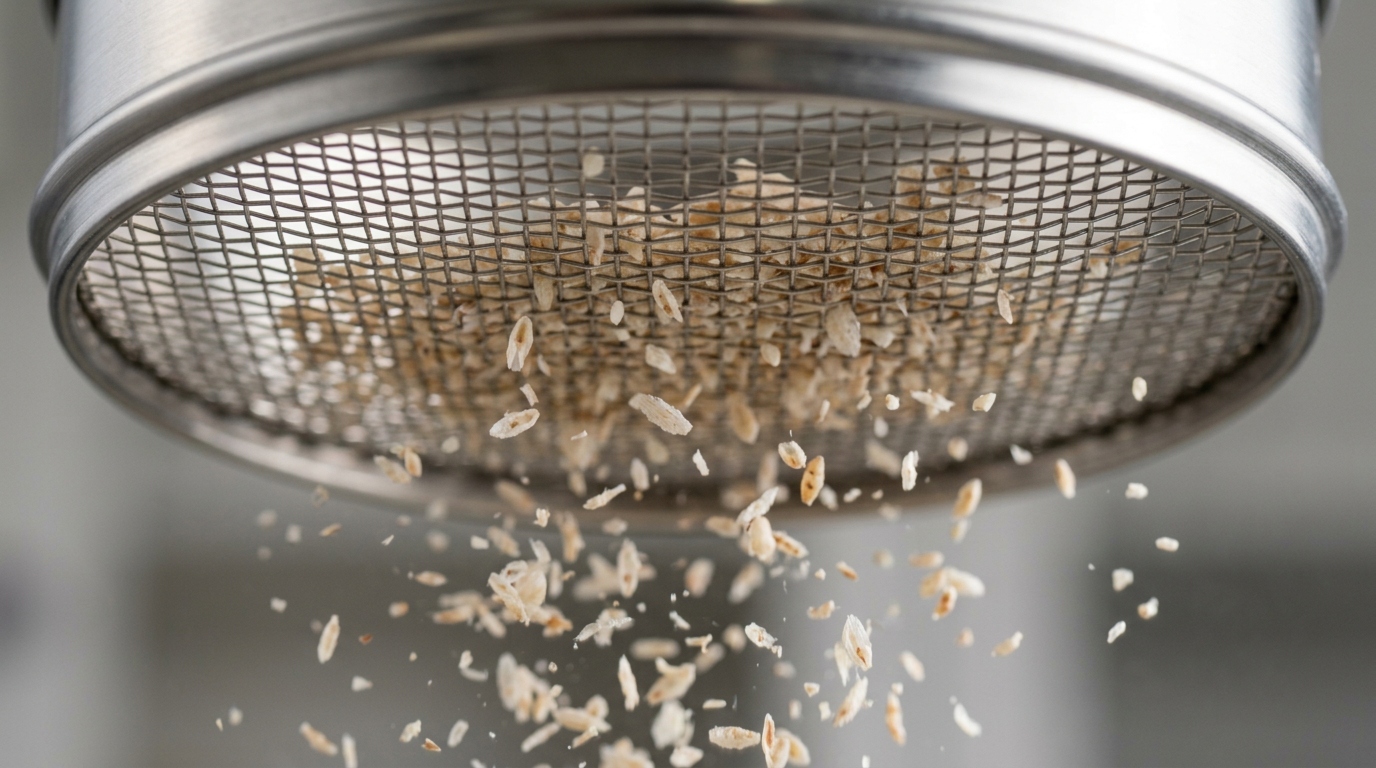
Psyllium husk is often bought the way a commodity gets bought – by price per kilo. That works right up until a batch behaves differently on the production line than the last one did: a sachet that doesn’t disperse cleanly, a capsule fill that clumps, a drink mix that goes gritty instead of smooth. The husk itself – the outer seed coat of Plantago ovata – is the same botanical source across every supplier. What varies enough to matter is purity grade, particle size and swelling capacity, and those three variables aren’t always priced or specified the way buyers assume.
What “purity” actually measures?
Psyllium husk is typically sold in four purity tiers – roughly 85%, 95%, 98% and 99% – where the percentage reflects how much pure husk fibre remains after seed particles, chaff and other plant debris are mechanically separated out. Higher purity generally means a lighter-coloured, more fibrous, lower-residue material.
But purity isn’t the whole quality picture, and treating it as one can lead to overpaying. Two lots at the same purity percentage can still perform differently on a line if their particle size (mesh), moisture content or swelling behaviour diverge – and the reverse is also true: for a flavoured, sweetened or multi-ingredient blend, the difference between 90% and 95% purity often disappears into the finished formulation entirely. Most nutraceutical manufacturers standardise on 95% as the practical default – it balances fiber concentration, colour and consistent swelling against cost – and reserve 98–99% pharmacopoeial-grade material for applications that specifically require it.
Solubility is the number that actually predicts performance
The functional indicator that matters more than purity alone is swell volume – how many millilitres of gel one gram of husk forms in water, measured under USP methodology. Swell volume is what determines gelling strength in a beverage, binding capacity in a tablet, and water-holding capacity in a baked or extruded product. As a general pattern across the purity tiers: 85% grade typically swells to around 35 ml/g and suits applications where visible texture is acceptable, such as bakery or blended fiber mixes; 95% grade typically reaches roughly 40–42 ml/g, the range most capsule, sachet and powder-drink applications specify; 98–99% pharmacopoeial grades commonly reach 45–50+ ml/g, with tighter moisture, ash and microbial limits attached.
Particle size (mesh) rides alongside swell volume. Coarser, flake-form husk gives visible texture – fine for artisan bread or high-fibre cereal – while finely milled powder (80–100+ mesh) disperses invisibly into drink mixes and flows correctly through dosator or tamping-pin capsule-filling equipment. Buying the wrong mesh for the format is a common, avoidable production problem.
Where does the quality difference show up in the finished product?
- Capsules and tablets – need fine, consistent mesh and predictable swell volume for accurate fill weight and compression.
- Powder sticks and sachets – need controlled particle size so the fiber disperses without visible grit or clumping in water.
- Bakery and food-format applications – tolerate coarser, lower-purity material, since texture is expected.
- Any product carrying a regulated fiber claim – needs to meet the specific purity and composition thresholds the claim requires, not just “high purity” in general.
Psyllium’s best-documented regulatory claim is the US FDA’s authorised coronary heart disease claim under 21 CFR 101.81, which requires a minimum purity of 95%, protein content at or below 3%, combined extraneous matter at or below 4.9% by USP methodology, and a delivered dose of at least 7g of soluble fiber per day. The clinical evidence behind psyllium’s cholesterol and bowel-regularity effects is well established in the literature, but the exact EU-authorised claim wording available for psyllium specifically – as distinct from oat or barley beta-glucan, which do carry settled EFSA Article 13.1 claims – is not consistent across sources and should be confirmed against the current EU Register before it’s used on any label or in any marketing copy.
Where quality meets production
A certificate of analysis tells a buyer what a lot measured on the day it was tested. What it doesn’t tell them is how that material will actually behave once it’s blended, dosed and filled at scale – that’s a production question, not a sourcing one. Noviatic, a European contract manufacturer based in Vilnius and Kaunas, Lithuania, works with psyllium husk across its powder, stick-pack and sachet lines, where mesh size and swell volume translate directly into blend uniformity, fill consistency and finished texture.
For brands sourcing psyllium at scale, it’s worth seeing how that grade-to-performance link plays out in practice – learn more about Noviatic’s fibre manufacturing capabilities.
The purity number on a spec sheet is a starting point for that conversation. It isn’t the end of it.
- https://girirajpsyllium.in/psyllium-husk-powder-grades-85-95-99-purity
- https://harmainglobal.com/psyllium-husk-purity-grades-why-95-is-not-always-better-than-85/
- https://satdalinternational.com/psyllium-husk/
- https://rmpsyllium.com/en/products/psyllium-husk-powder/
- https://www.ecfr.gov/current/title-21/chapter-I/subchapter-B/part-101/subpart-E/section-101.81
- https://www.sciencedirect.com/science/article/pii/S0002916522030076
Continue reading.
What to check before choosing a liquid shot manufacturer?
A shot looks like the simplest product on the shelf: one small bottle, one dose, gone in a...

Fish, Algae or Cod Liver: Choosing an Omega-3 Oil Source
Before a brand decides on flavour, format or dose, there’s a more fundamental choice sitting underneath every liquid...
Why Liposomal Delivery Outperforms Standard Formats – and Where It Doesn’t
Why Liposomal Delivery Outperforms Standard Formats – and Where It Doesn’t “Liposomal” has become one of the most...