
Omega-3 Supplement Manufacturer – EPA, DHA, Fish Oil and Algal Oil
Noviatic is a European contract manufacturer of finished food supplements, based in Vilnius and Kaunas, Lithuania. We formulate and manufacture omega-3 supplements – high-EPA and high-DHA fish oil, cod liver oil and vegan algal oil, in softgel and liquid formats – for supplement brands, pharmacy chains and distributors across 40+ countries, inside our own GMP-certified facility.
Omega-3 is not one ingredient. It's two – and they do different things.
Most supplement brands brief omega-3 as a single active. In practice, every omega-3 formula is a ratio of two distinct fatty acids – EPA (eicosapentaenoic acid) and DHA (docosahexaenoic acid) – and the ratio determines what the product can claim, who it’s positioned for and which channel it belongs in.
EPA is primarily associated with cardiovascular and anti-inflammatory positioning. It is the fatty acid behind the authorized EU health claim for normal cardiac function at 250 mg daily intake. High-EPA formulas dominate the heart health and general wellness categories.
DHA is primarily associated with brain function, visual development and prenatal nutrition. It is the fatty acid behind the authorized EU health claims for normal brain function and normal vision, and the one most commonly specified in prenatal and children’s ranges.
A standard omega-3 supplement contains both in a roughly equal ratio – general wellness positioning where neither specific claim is the primary driver. A high-EPA formula prioritizes cardiovascular positioning – the most common brief for pharmacy-channel supplements. A high-DHA formula suits brain health, prenatal, children’s and cognitive positioning.
The EPA:DHA ratio is confirmed at the brief stage. It determines sourcing, concentration target and what the label can legitimately claim.
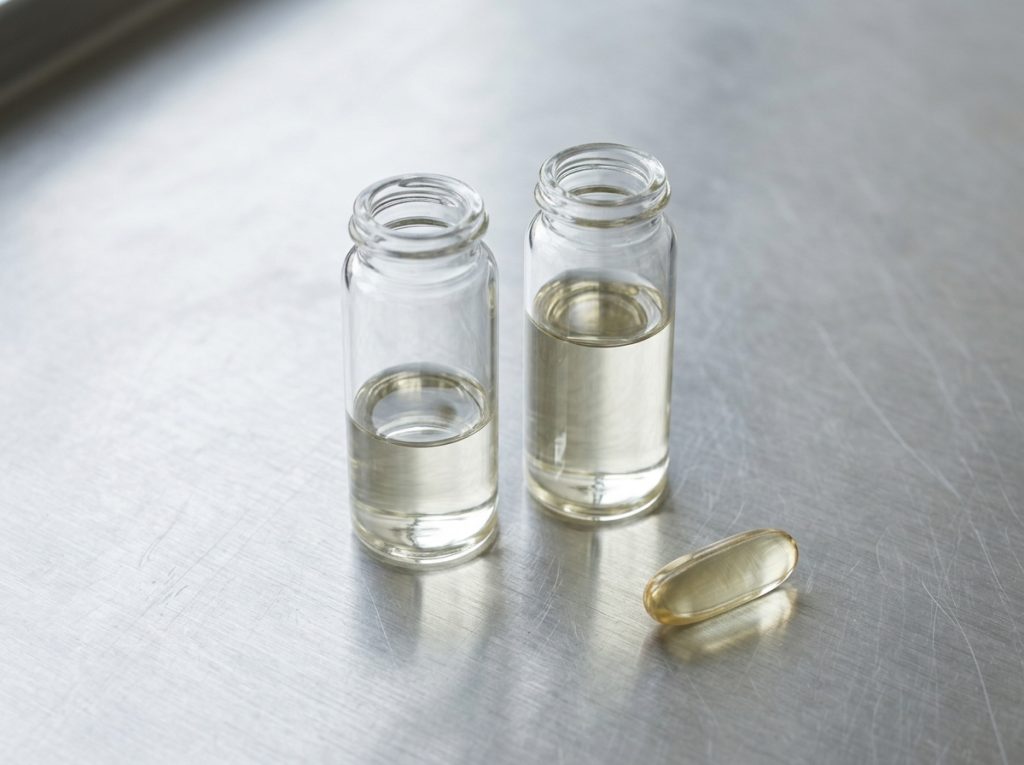
Not all fish oil is equal. The form and concentration determine what the product actually delivers.
Standard fish oil typically contains 18–30% omega-3 by weight. A 1,000 mg softgel at standard concentration delivers roughly 180–300 mg of EPA and DHA combined – meaning three to five softgels to reach 1,000 mg EPA+DHA per serving.
Grade | Omega-3 content | Typical use |
Standard (natural TG) | ~30% EPA+DHA | Entry-level, general wellness, competitive price point |
Concentrated (60%) | ~60% EPA+DHA | Two softgels achieves a meaningful dose |
High-concentrate (70–80%) | 70–80% EPA+DHA | One softgel delivers a full clinical serving |
Ultra-concentrate (90%+) | 90%+ EPA+DHA | Specialist and clinical positioning |
Molecular form matters as much as concentration. Fish oil is processed in three forms:
Natural triglyceride (TG) – the form closest to how omega-3 occurs in fish. Well absorbed, stable, but hard to concentrate above 30–35% without further processing.
Ethyl ester (EE) – the most common concentrate form. Allows high concentration but absorbs less efficiently than TG form. Most omega-3 concentrates on the market are ethyl esters.
Re-esterified triglyceride (rTG) – ethyl esters converted back into a triglyceride structure after concentration. Combines high EPA+DHA content with TG-form absorption. The premium form, at a premium cost – and increasingly requested by brands competing on bioavailability.
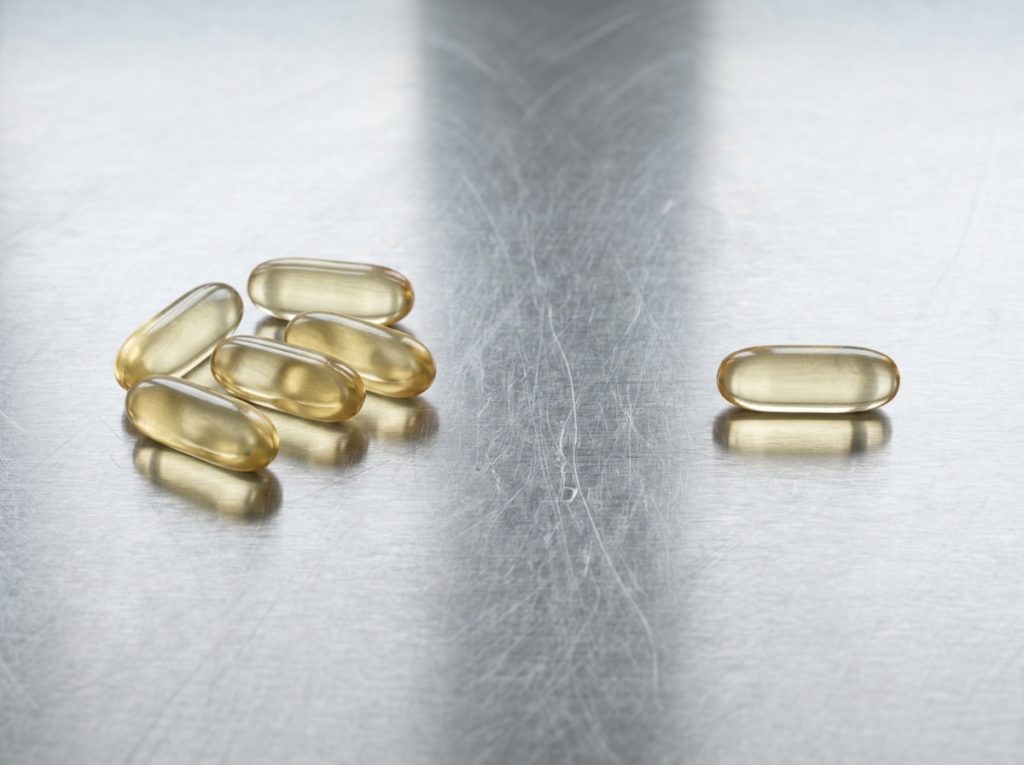
Fish oil, cod liver oil or algal oil – what each one suits?
Source | Profile | Best for |
Fish oil | High EPA+DHA, neutral to mild flavour | Cardiovascular, general wellness, sports nutrition, pharmacy staple |
Cod liver oil | Moderate EPA+DHA, naturally contains vitamins A and D | Traditional positioning, children’s and family ranges, Nordic markets |
Vegan algal oil | EPA and DHA without fish source – plant-derived | Vegan positioning, prenatal (DHA-forward), fish allergy sensitivity |
Cod liver oil carries natural vitamins A and D – which adds positioning options but requires careful dosing management, since both have established upper limits in EU regulation. Confirmed during the formulation brief.
Algal oil is the original source of marine omega-3 – fish accumulate EPA and DHA by eating algae. Algal oil bypasses the fish entirely, delivering the same fatty acids in a form that’s appropriate for vegan consumers and those with fish allergies. EPA:DHA ratios in algal oil are typically DHA-dominant.
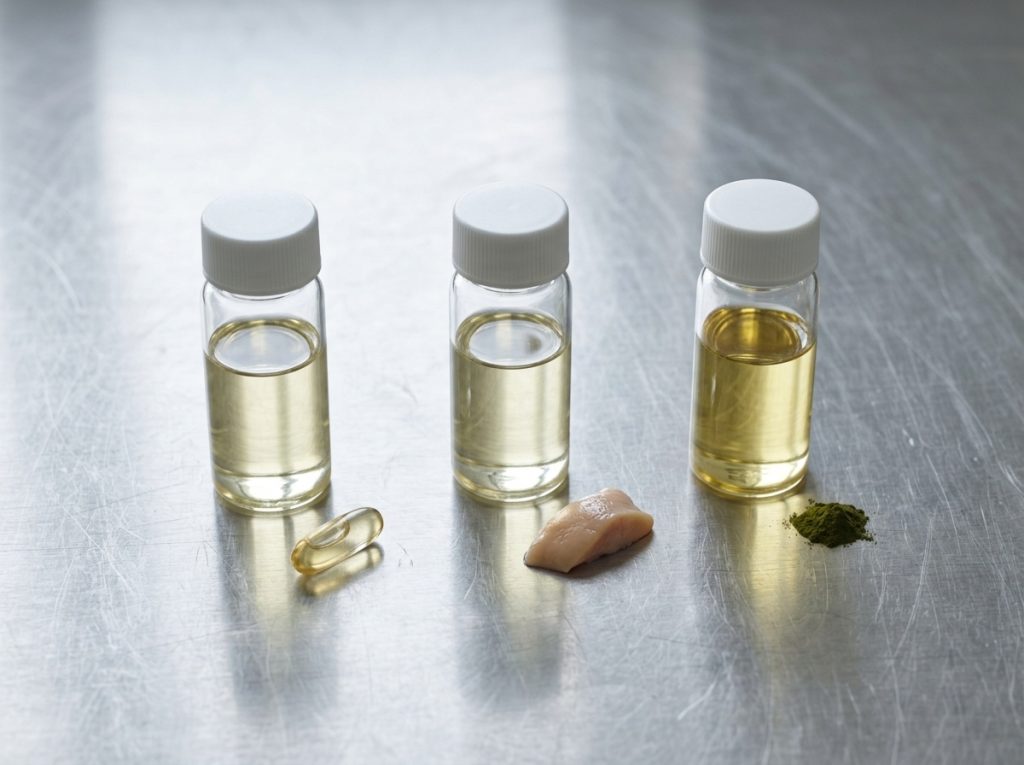
The format determines the serving experience and the dose ceiling
Format | Typical use | Notes |
Softgel | Standard adult daily supplement – the default format | Up to ~1,400 mg per softgel depending on shell size |
Liquid | Higher-dose servings, children’s and family formats | No practical dose ceiling – 5–15 ml per serving is typical |
Emulsion | Children’s, flavoured and enhanced-bioavailability formats | Dose controlled by serving volume |
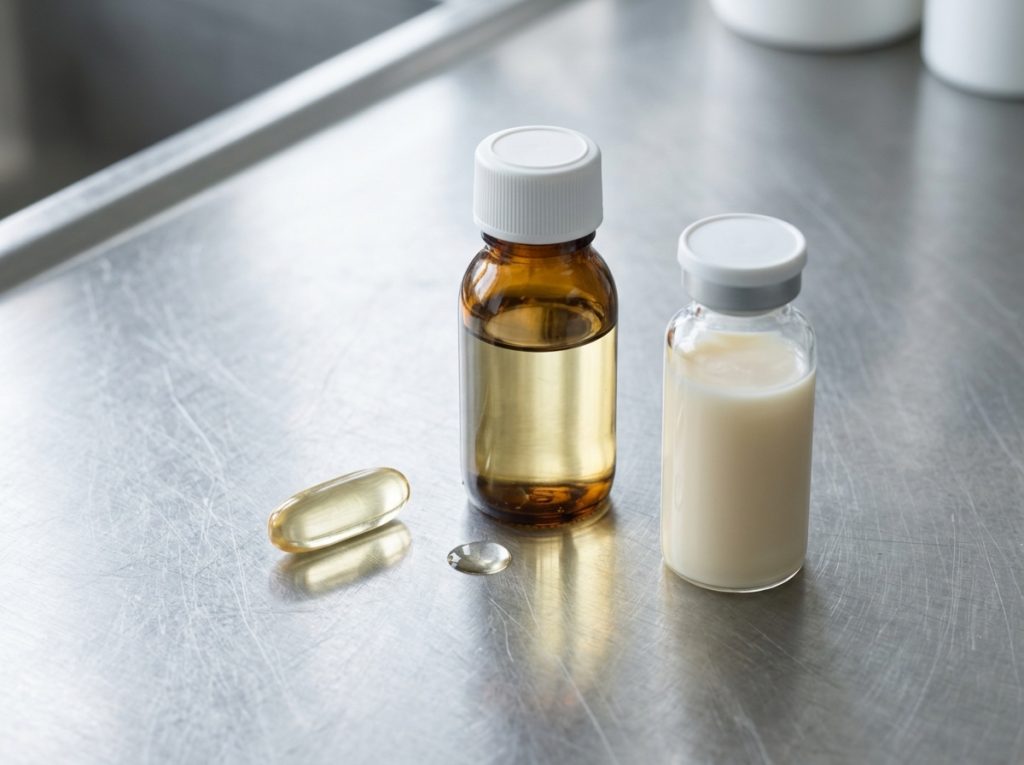
Liquid omega-3 offers the highest dose flexibility – and is the format where oxidation control matters most. There is no capsule shell to limit oxygen contact, so manufacturing controls at every stage are the only protection against degradation. Our liquid omega-3 runs on dedicated lines under an inert atmosphere, with TOTOX testing across all forms.
Tell us what you're building. We'll get back to you quickly.
Share your format, indicative volume and target markets and we will come back to you within a few business days to confirm receipt and let you know what we need to prepare a full response. Pricing, capability details and a fit assessment follow as soon as we have reviewed your brief.
What brands ask us about Omega-3 manufacturing?
What is the difference between EPA and DHA?
EPA is associated with cardiovascular and anti-inflammatory positioning – the fatty acid behind the authorised EU health claim for normal cardiac function. DHA is associated with brain function, visual development and prenatal nutrition. Standard supplements contain both; high-EPA and high-DHA formulas emphasise one. The ratio is confirmed during the brief.
What is the difference between TG, EE and rTG omega-3?
Natural triglyceride (TG) is the form closest to fish tissue – well absorbed but hard to concentrate. Ethyl ester (EE) allows high concentration but absorbs less efficiently. Re-esterified triglyceride (rTG) combines the concentration of EE with the absorption profile of TG – the premium form, priced accordingly.
What does "high-EPA" or "high-DHA" mean on a label?
It refers to the concentration of that specific fatty acid per serving, not total oil content. A 1,000 mg softgel containing 60% omega-3 with a 3:2 EPA:DHA ratio delivers approximately 360 mg EPA and 240 mg DHA. Total oil weight and active fatty acid content are different numbers – the one that matters for health claims is fatty acid content per serving.
Why does TOTOX matter and what is your standard?
TOTOX measures cumulative oxidation in an oil – primary and secondary – in a single number. An oxidised oil has degraded beyond its label specification. The industry-accepted upper limit is typically 26.
Can you produce vegan omega-3 from algal oil?
Yes. Algal oil delivers EPA and DHA without fish source, making it appropriate for vegan-positioned products and consumers with fish allergies. Ratios are typically DHA-dominant, which suits brain health and prenatal positioning.
What is the minimum order quantity for omega-3 supplements?
MOQ is confirmed per project during the quote, and varies by format, source material and concentration. Pilot batches are available for new formulations.
How long does an omega-3 production run take?
Approximately 11–13 weeks from purchase order for an existing formulation. Custom formulation or novel source material adds development time – confirmed per project.
What testing does each omega-3 batch go through?
Identity, EPA and DHA content, TOTOX, heavy metals including dioxins and PCBs and microbial count. EPA and DHA are confirmed per batch – not estimated from the oil grade. Every batch ships with a Certificate of Analysis. Not every test applies to every product; what’s required is agreed with you upfront and confirmed in the specification.