
Minimum Order Quantities and Lead Times – What to Expect
The two questions that come up on almost every first call are MOQ and lead time. Neither has a single answer that applies to every product – both depend on format, formula complexity and the volume you are working with. Here is how we think about both.
MOQs are set by format, complexity and what the machinery can actually run
There is no universal MOQ across everything we produce. Every format runs on dedicated equipment, and each production line has a technical minimum – a batch size below which the machinery simply cannot operate reliably. On top of that, below a certain volume, blend uniformity may be affected and quality testing becomes less representative of the finished product.
So MOQs exist for two reasons: stable production and reliable quality control. Not to filter out smaller brands.
What affects your MOQ:
- Format – every delivery format runs on different equipment with its own technical threshold. Liquids, shots, tablets and capsules each have different minimums.
- Formula complexity – more actives, novel ingredients or specialised delivery systems affect the minimum viable batch.
- Production-line capacity – machinery operates within defined technical parameters. The minimum is what the line requires, not what we prefer.
- Packaging – custom packaging with short print runs can influence the overall minimum independently of production.
Exact MOQ for your specific product is confirmed during the quote process, once we understand the format and formula brief.
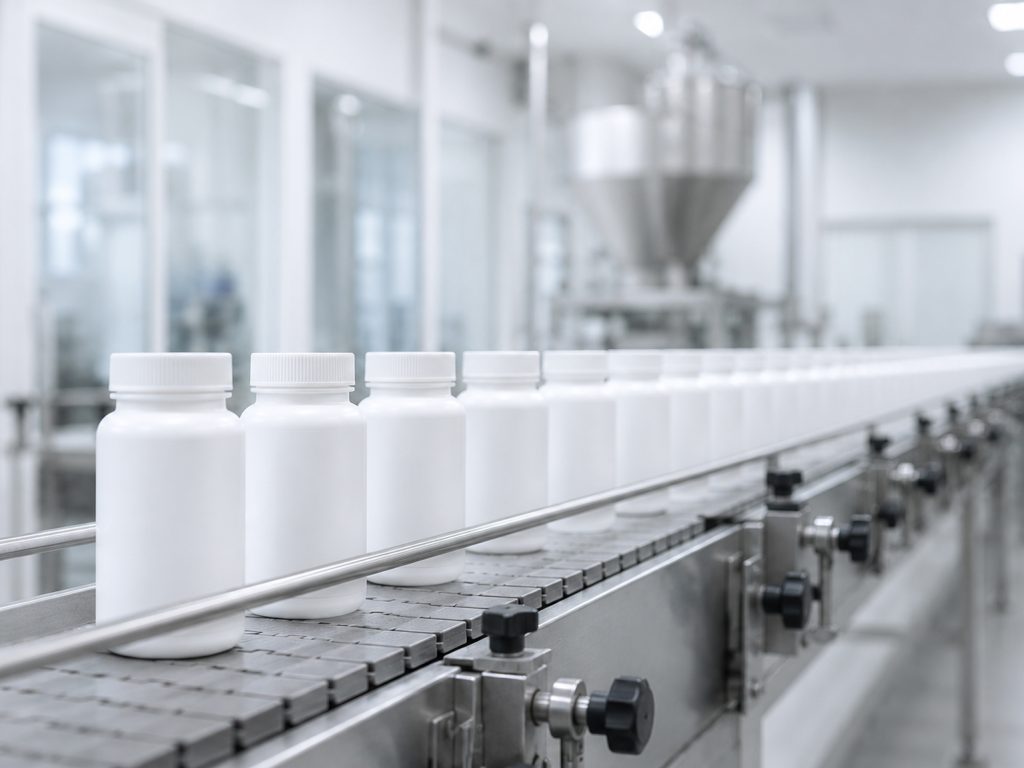
Pilot batches are available for new formulations
If you are launching a new formula and want to validate it before committing to a full production run, pilot batches are available. Pilot batches run under the same conditions as full production runs – the same equipment, the same QC testing, the same documentation – just at a smaller batch size. It is not a shortcut to market, it is a controlled way to confirm the product performs as expected before you commit to scale.
Pilot batch availability, scale and conditions are confirmed during the quote process.
What drives lead time – and what a realistic timeline looks like
Lead time depends on where your project starts. A brand coming with an existing, validated formula and a defined packaging brief has a shorter path to first shipment than one starting from a concept brief with no formula yet.
The main stages that determine total lead time:
- Formulation – if R&D is required, this adds time before production can begin. Complexity determines how much.
- Ingredient sourcing – standard ingredients from our qualified supplier network move quickly. Novel or specialised actives take longer to source and qualify.
- Production scheduling – slot availability on the relevant production line affects when your run can start.
- QC and release – every batch goes through full quality testing before it is released. This is not a stage that gets shortened.
- Packaging – custom packaging artwork, print production and delivery needs to be in place before filling can begin.
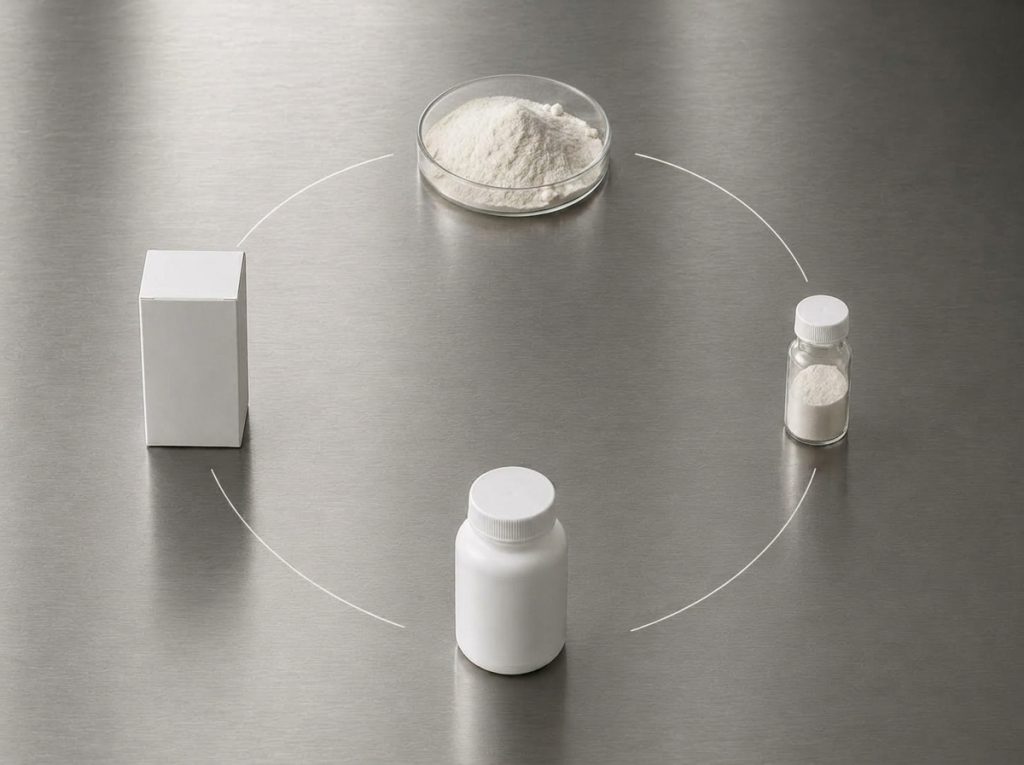
Realistic timelines by project type
These are indicative ranges. Your project manager confirms exact timelines once we have reviewed your brief.
Project type | Indicative lead time |
Private label – existing formula, your branding | From approximately 2.5 months from purchase order |
Contract manufacturing – existing formula | Approximately 2.5 – 3 months from purchase order |
Custom formulation + production | Formulation development adds time on top of standard lead times – confirmed per project |
First production runs take longer than repeat orders. Once a formula is validated, production is scheduled and the supply chain is established, repeat order lead times are shorter.
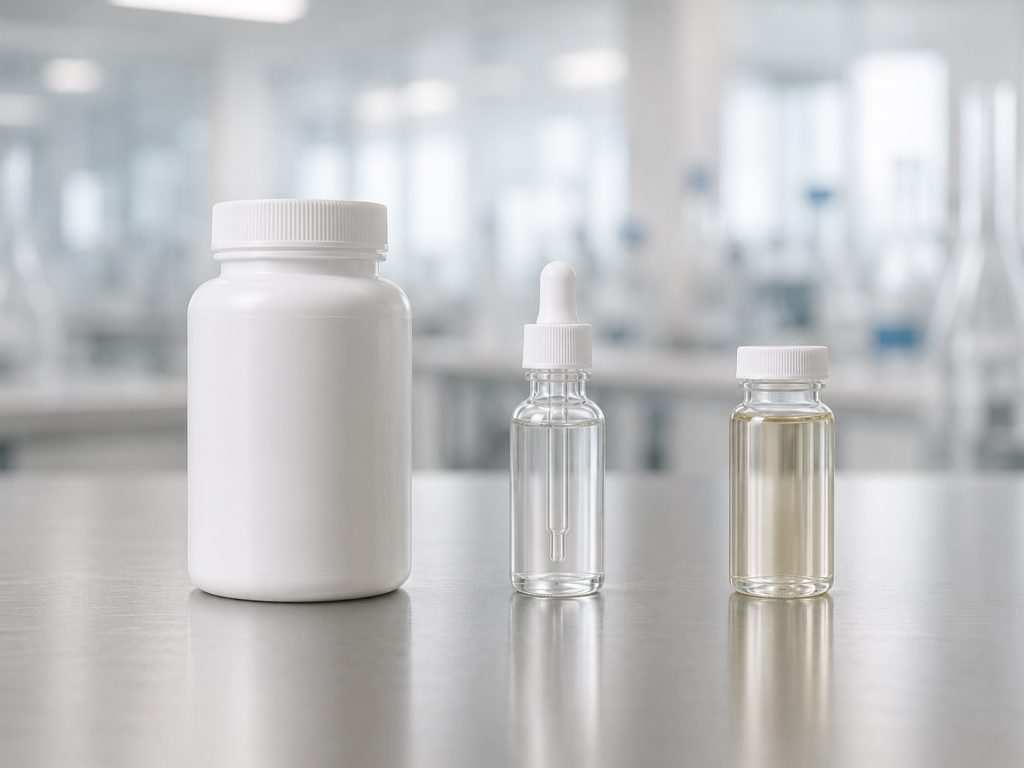
The brief you bring in determines how fast we can move
The brands that move fastest to first shipment are the ones that arrive with a clear brief. The more defined your starting point, the less time is spent on alignment before work begins.
What helps:
- A clear formula brief or an existing specification
- Confirmed target markets – regulatory requirements vary by country and need to be built in from the start
- Packaging artwork ready or in progress – print lead times are often the longest single variable
- Realistic volume expectations – confirmed volumes allow us to schedule production and source ingredients without delays
- Choosing a private label formula – significantly faster than custom development, and the recommended route for liquid shots in particular.
Your project manager confirms what is needed at the first call and keeps the timeline moving from there.
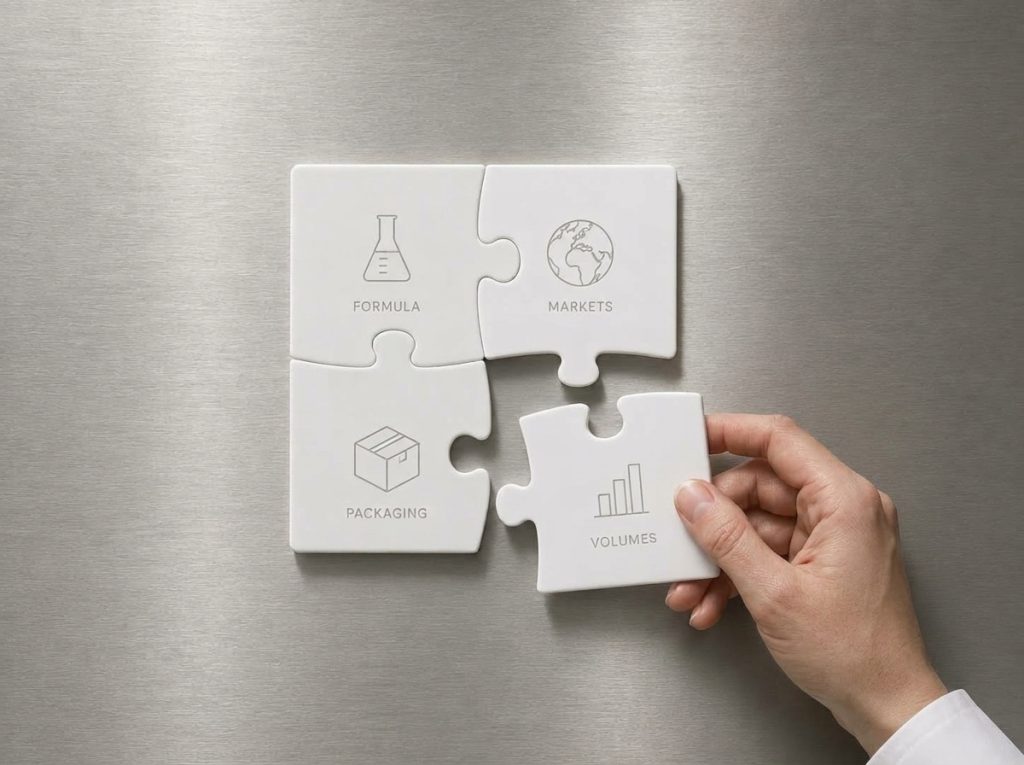
Tell us what you're building. We'll get back to you quickly.
Share your format, indicative volume and target markets and we will come back to you within a few business days to confirm receipt and let you know what we need to prepare a full response. Pricing, capability details and a fit assessment follow as soon as we have reviewed your brief.
What brands ask us about MOQ and lead times?
What is your minimum order quantity?
MOQ varies by format and formula complexity. There is no single number that applies across everything we produce. Exact MOQ is confirmed during the quote process once we review your product brief.
Can we start with a smaller pilot batch before committing to full production?
Yes. Pilot batches are available for new formulations – a practical step to evaluate the product and confirm it performs as expected before you scale. Availability and conditions are confirmed during the quote process.
How long does a first production run take?
It depends on where your project starts. A private label with an existing formula runs from approximately 2.5 months from purchase order. Contract manufacturing with an existing formula runs approximately 2.5 – 3 months. Custom R&D adds time on top. Your project manager confirms exact timelines once the brief is reviewed.
Are repeat order lead times shorter than first runs?
Yes. Once the formula is validated, production is scheduled and the supply chain is established, repeat orders move significantly faster than first runs.
What is the single biggest cause of delays?
Packaging. Custom artwork, print production and delivery timelines are often the longest variable in the process – and the one brands are least prepared for. Having artwork in progress before production starts is the most effective way to keep the overall timeline on track.
Do you work with brands that are still finalising their formula?
Yes. If you are still developing your formula, our R&D team can take the brief from concept through to pilot batch and full production. The timeline is longer, but the process is the same – one project manager, one facility, one contract.
Does volume affect lead time?
Volume affects production scheduling and ingredient sourcing, but not the quality testing stages, which are the same regardless of batch size. Very large volumes may require scheduling across multiple production slots.