
High-Concentration Omega-3 Manufacturer
Noviatic manufactures high-concentration omega-3 supplements from dedicated, oxidation-controlled facilities in Vilnius and Kaunas, Lithuania. High-EPA and high-DHA formulas in softgel and liquid format, supplied to supplement brands, pharmacy chains and distributors across 40+ countries. Liquid omega-3 is one of the most technically demanding categories in food supplements – stability, purity, taste and oxidation control all determine what ends up in the bottle. Getting the manufacturing partner right matters as much as getting the formula right.
Not every manufacturer who produces omega-3 should
Omega-3 is one of the highest-volume categories in European supplement retail. It’s also one of the most technically unforgiving to manufacture – particularly in liquid form.
The core problem is oxidation. Fish oil oxidises rapidly when exposed to oxygen, light or heat. The degradation is progressive: once it begins, it doesn’t stop. A product that leaves the facility within specification can arrive at a retailer or consumer outside it – not because of what happened in transit, but because the manufacturing process didn’t control the conditions that trigger degradation in the first place.
The second problem is concentration. A “high-EPA” or “high-DHA” label claim is only meaningful if the EPA and DHA content per serving matches what’s stated – and in a concentrated fish oil formula, the margin for imprecision is narrow. Total oil content and active content are not the same number, and not every manufacturer tests for both.
The third problem is taste. Oxidised fish oil tastes rancid. A product that passes oxidation testing at release but degrades in distribution arrives at the consumer as a product experience problem – the single fastest route to a one-star review and a customer who never reorders.
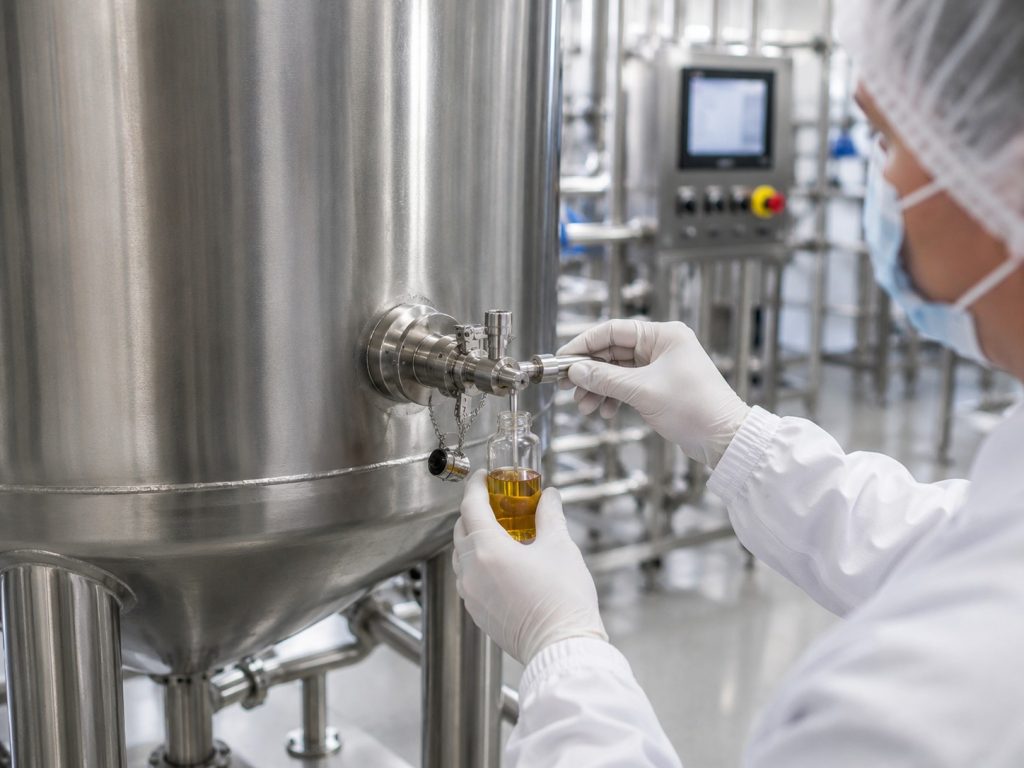
These aren’t problems that good intentions solve. They’re problems that dedicated equipment, inert-atmosphere processing and a TOTOX ceiling solve – when they’re applied consistently, at commercial scale, by a team that manufactures omega-3 and nothing else on the same line.
The brands and products where manufacturing depth makes the difference
Standard omega-3 at moderate concentrations is relatively straightforward to source. High-concentration omega-3 – products where EPA and DHA together represent 60–90% of the oil, or where the liquid format requires full oxidation control through every production stage – is a different category.
It suits brands building in:
Cardiovascular and clinical positioning. High-EPA and high-DHA concentrations are what authorised health claims and clinical references are built on. A product making a cardiovascular claim needs to deliver the stated EPA and DHA per serving, confirmed by batch testing – not estimated from total oil content.
Premium pharmacy retail. European pharmacy buyers assess omega-3 suppliers on documentation depth: TOTOX values, EPA/DHA confirmation per batch, traceability to raw material source. A manufacturing partner who can provide that without being asked is an asset in a retailer qualification process.
Vegan and plant-based ranges. Algal omega-3 carries the same bioavailability as fish-sourced oil – EPA and DHA, not just ALA – in a format that serves vegan consumers without compromise. The formulation and oxidation controls required are the same.
Brands where sensory quality is a product differentiator. In liquid omega-3, taste isn’t just palatability – it’s a quality indicator. A flavoured liquid omega-3 that still tastes clean at month 18 is a formulation and manufacturing achievement. We build it in from the raw material stage.
Built on specialised liquid omega expertise
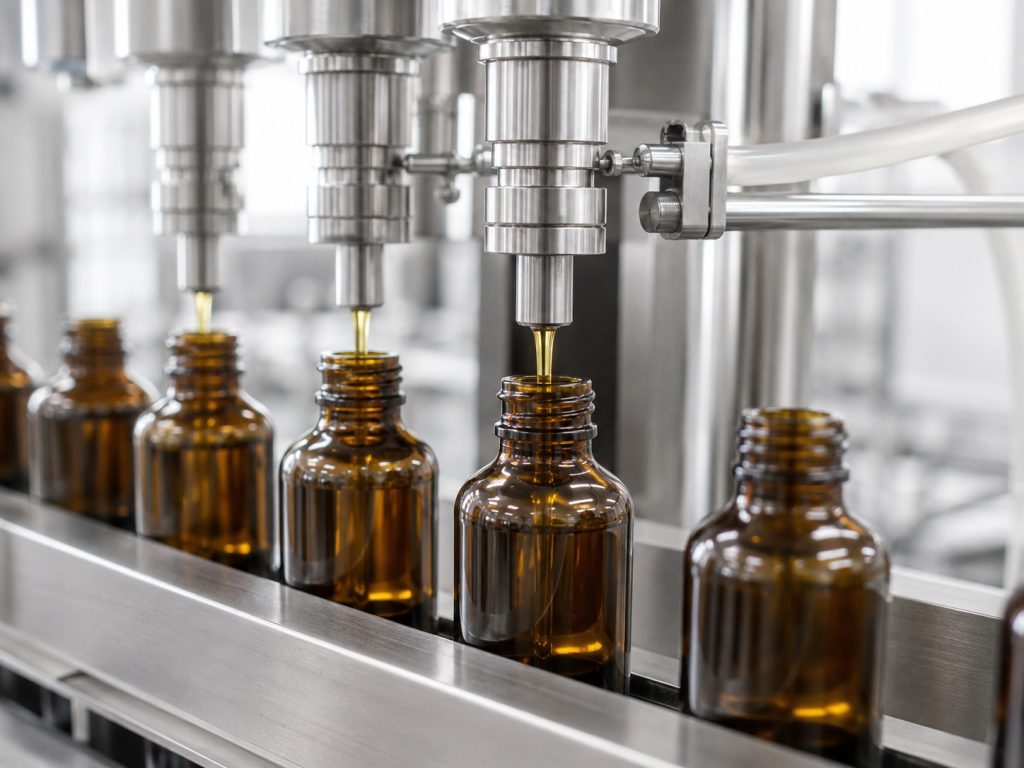
Liquid omega manufacturing demands precise control across every stage – raw materials, processing, filling, flavour and packaging. Raw materials are tested on arrival for identity, purity and oxidation status before they reach the line. Processing runs under inert atmosphere to limit oxygen exposure. Filling and sealing are timed and validated to prevent oxidation at the point of packaging. Flavour is managed not just for consumer preference but as a functional indicator: in a liquid omega product, taste tells you what the numbers confirm.
Executing these controls consistently – at commercial scale, across different source materials and formats – is where manufacturing experience becomes the differentiating factor. We have spent years refining the process discipline that makes consistency repeatable across both own-brand and private-label production.
The output runs on dedicated liquid lines – separate equipment, separate teams, omega-3 only. The same infrastructure behind our Top Liquid Nutraceuticals Company recognition from Life Sciences Review Europe, 2026, and behind the large-scale projects we run for supplement brands and pharmacy chains across 40+ countries.
From raw oil to finished product – what does the process actually involve?
Raw material intake and oxidation testing. Every incoming oil batch is tested before it enters the production environment – identity, purity, EPA and DHA content, and crucially, initial oxidation status. An oil that arrives already oxidised cannot be corrected downstream. Intake testing is the first quality gate, not a formality.
Inert atmosphere processing. Oxygen is the primary driver of omega-3 oxidation. Processing under nitrogen or other inert gas conditions limits oxygen exposure at the stages where the oil is most vulnerable – blending, heating and transfer between vessels. This is not standard practice across the industry. It is standard practice on our lines.
Concentration and purification. For high-EPA and high-DHA formulas, the oil undergoes molecular distillation to concentrate the active fatty acids and remove contaminants including heavy metals, PCBs and dioxins. The resulting oil is leaner, purer and higher in active content per gram than a standard fish oil.
Flavour integration. For liquid products, flavour is added at a defined stage under controlled conditions – not as a finishing step. The flavour system is built to complement the oil’s natural profile and to hold across the product’s full shelf life, not just at the day of production.
Filling and sealing under controlled conditions. Fill volume accuracy and headspace oxygen levels at sealing both affect the finished product’s stability. Both are validated during the pilot run and monitored across production batches.
Pilot batch. Same equipment, same controls, smaller scale – the last checkpoint before volume commitment.
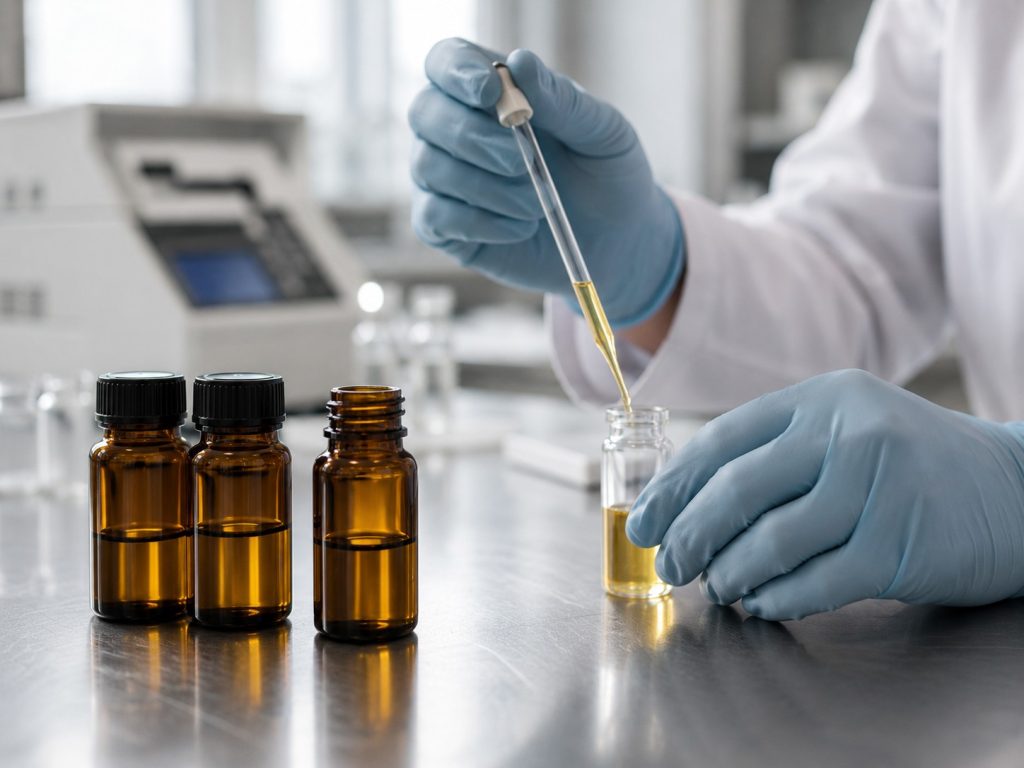
Batch release testing. Each finished batch is tested for EPA and DHA content, TOTOX (peroxide value and anisidine value), heavy metals, microbial count and identity before a Certificate of Analysis is issued and the batch cleared for shipment. TOTOX is held to a strict internal ceiling, applied across every format and source material.

A strict internal ceiling on every format
Omega-3 oxidises faster than almost anything else we manufacture – and an oxidised fish oil doesn’t just smell wrong, it’s a lower-quality product than what was on the label. TOTOX measures both primary and secondary oxidation in a single value, making it the most reliable indicator of overall oil quality. Elevated TOTOX shows that deterioration has already begun, even before taste or smell change.
In liquid omega-3 products, there is nowhere to hide. Capsules can mask early oxidation; liquid formulas cannot – the oil’s condition is fully expressed in the final product. That is why liquid omega-3 manufacturing demands more process discipline than encapsulated formats: tighter raw-material intake standards, inert-atmosphere processing and validated packaging, not just good intentions.
We hold TOTOX to a strict internal ceiling, applied across every format and source material. Hitting it consistently is the baseline. It is also what separates manufacturers who can reliably produce liquid omega-3 from those who shouldn’t be trying.
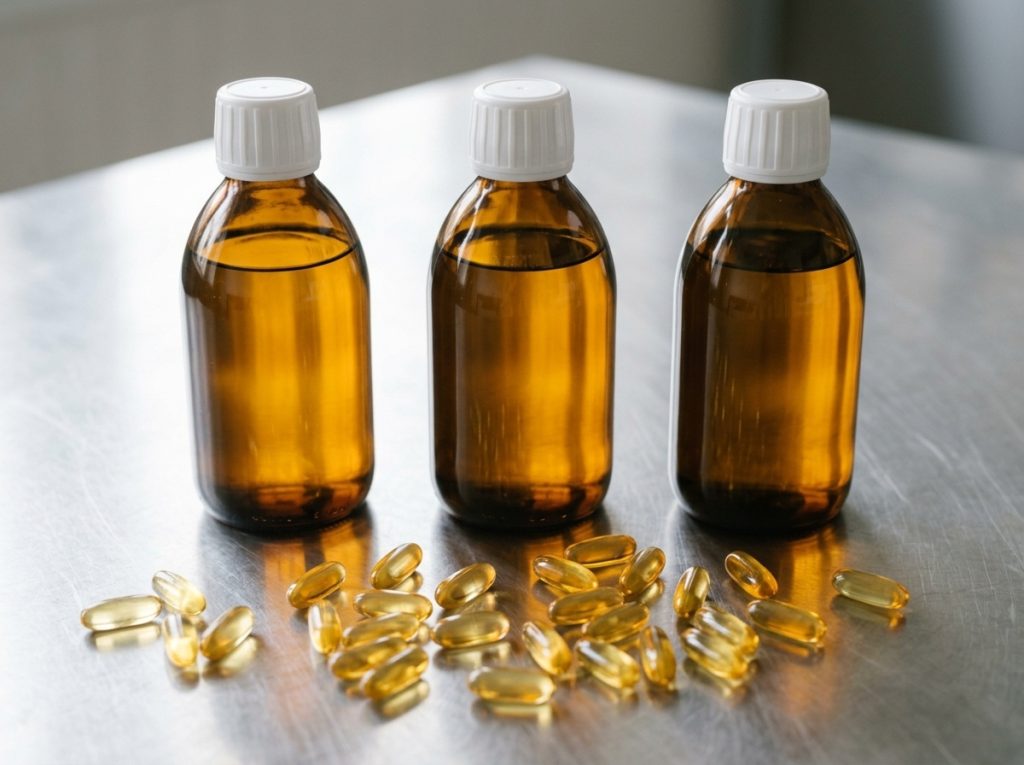
Fish oil, cod liver oil or algae – your formula, our sourcing network
We produce omega-3 across the source materials and formats brands ask for most:
High-EPA and high-DHA fish oil – concentrated formulas for cardiovascular, joint and general wellness positioning, sourced from qualified suppliers and tested on arrival for identity and purity.
Cod liver oil – traditional positioning with the added vitamin A and D content cod liver oil carries naturally.
Vegan algal oil – for brands building a plant-based or vegan-positioned range, without compromising on EPA/DHA concentration.
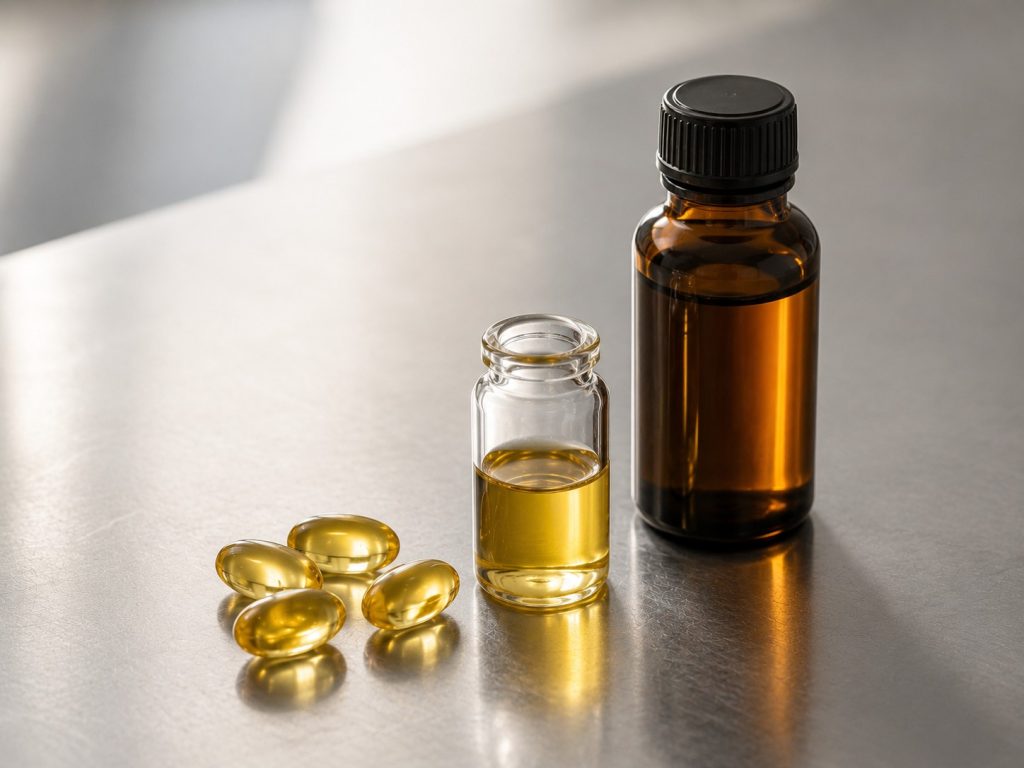
Softgels and liquids – softgel for a familiar daily format, liquid for higher-dose servings or a consumer who doesn’t want to swallow a capsule.
If your formula calls for a blend, a specific EPA:DHA ratio, or a rTG (re-esterified triglyceride) form for higher absorption, share the brief and our R&D team will confirm feasibility.

From formula to finished bottle
Formulation review → fish/algae oil sourcing → encapsulation or filling → oxidation testing → packaging.
One project manager runs the project from your first brief through delivery – and stays on for reorders, label updates and reformulation requests after launch.
Flexible MOQ – defined per project, with pilot batches available for new formulations.
Lead time –11-13 weeks from purchase order, depending on format and source material.
Packaging and labelling – in-house design, printing, filling and labelling, or we work with your existing artwork.
What brands ask us about Omega-3 manufacturing?
What separates a high-quality omega-3 product from a standard formula?
A high-quality omega-3 product delivers a meaningful amount of EPA and DHA per serving, uses carefully selected fish oil and is produced under strict controls for purity, freshness and oxidation.
Standard omega-3 formulas often contain a lower concentration of EPA and DHA, meaning consumers may need to take more capsules or a larger serving to achieve the same intake.
The difference is not only concentration. Raw-material quality, purification, flavour, packaging and oxidation control all influence the final product. We apply a strict internal TOTOX target to support freshness and product quality throughout.
Which omega-3 source should I choose – fish oil, cod liver oil or algae?
It depends on your positioning and audience. Fish oil and cod liver oil suit traditional and high-potency claims. Algal oil suits vegan or plant-based positioning. Share your target market and we’ll confirm which source fits.
Can I private label an existing omega-3 formula?
Yes. Our private label library includes tested omega-3 formulas across softgel and liquid formats. Most can be adjusted – concentration, format or source – to fit your brand. For liquid omega-3 products, the formula can often be adapted to match your brand positioning and target consumer. Options may include:
- different EPA and DHA concentrations;
- flavours such as lemon, orange or other suitable profiles;
- additional vitamins or complementary active ingredients;
- adjusted serving sizes and product positioning.
We can start from an existing, proven formula, adapt it to your requirements or propose a new product concept based on your market, brand expectations and target price. All adjustments remain subject to technical feasibility, stability and regulatory assessment.
What is the minimum order quantity for omega-3 products?
MOQ varies by format and source material and is confirmed during the quote, it starts from 5000 bottles. Pilot batches are available for new formulations.
How long does an omega-3 production run take?
Approximately 11–13 weeks from purchase order for an existing formulation. Custom formulation adds development time, confirmed per project once we review your brief.
Why do you test for EPA and DHA specifically?
Total oil volume tells you how much fish oil is in the product. EPA and DHA tell you whether it works. Those levels confirm active content, label accuracy and whether the product can support authorised health-claim positioning – which is why we test for them on every batch, not just during development.
Tell us what you're building. We'll get back to you quickly.
Share your format, indicative volume and target markets and we will come back to you within a few business days to confirm receipt and let you know what we need to prepare a full response. Pricing, capability details and a fit assessment follow as soon as we have reviewed your brief.