
Hydrolysed Collagen Peptide Manufacturer – Marine, Bovine and Chicken
Noviatic is a European contract manufacturer of finished food supplements, based in Vilnius and Kaunas, Lithuania. We formulate and manufacture hydrolysed collagen peptide supplements – across marine, bovine and chicken sources, in powder, capsule and liquid shot formats, backed by an in-house R&D team that develops more than 300 new formulas a year, for supplement brands, pharmacy chains and distributors across 40+ countries, inside our own GMP-certified facilities.
What collagen peptides are and how do they differ from whole collagen protein?
Collagen is the most abundant structural protein in the body – present in skin, bone, cartilage, tendons and connective tissue. In its whole form, it is too large a molecule to pass through the gut wall. For supplement use, it is broken down through hydrolysis into shorter peptide chains small enough to be absorbed.
The result is hydrolysed collagen peptides – the ingredient form used in virtually all finished collagen supplements on the market. The process is standard across all collagen sources: marine, bovine and chicken. What differs between sources is the collagen type present and the positioning each suits.
Collagen peptides are water-soluble, largely neutral in taste and dissolve cleanly in liquid – which is why they work across a wider range of supplement formats than most other high-dose protein ingredients.
That simplicity is where the risk usually hides. Hydrolysis produces a range of peptide chain lengths, and the average molecular weight of that range affects solubility and mouthfeel – a powder that dissolves cleanly in one batch and turns gritty or cloudy in the next is a process-control issue, not a raw-material one. For a product declaring 10g of collagen, that means 10g of the specified collagen raw material added per serving, built into the approved formulation from the start.
Every batch we produce carries full traceability back to the raw material, so that question has an answer on the first call, not the fifth.
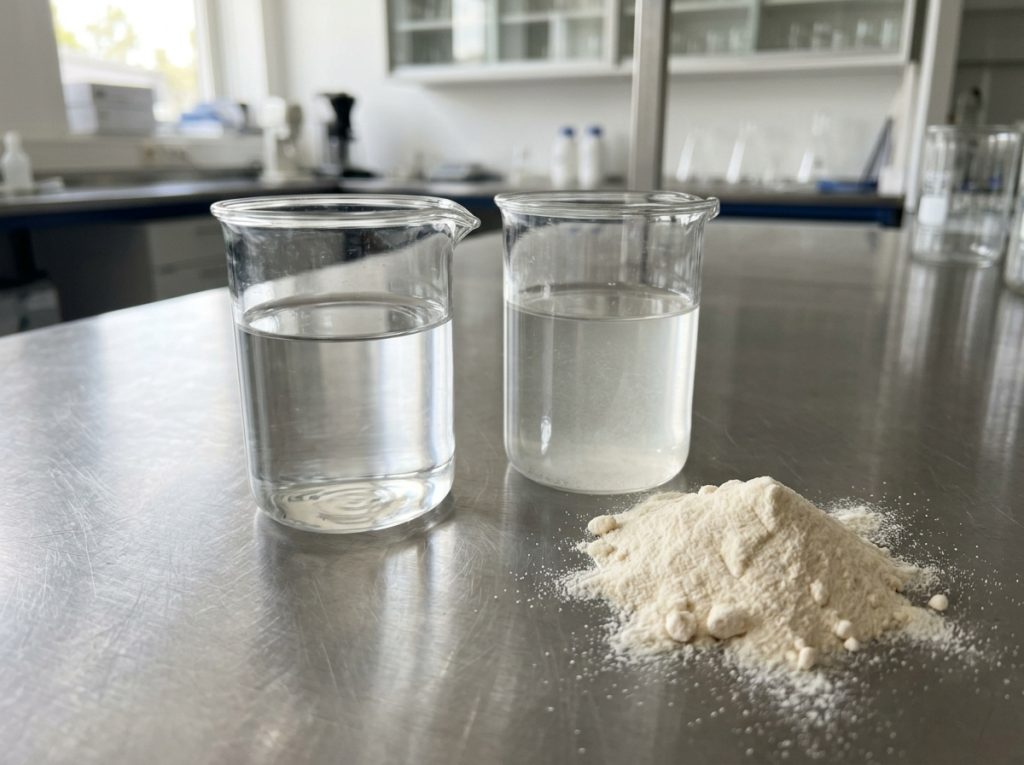
Marine, bovine or chicken – the source determines the positioning
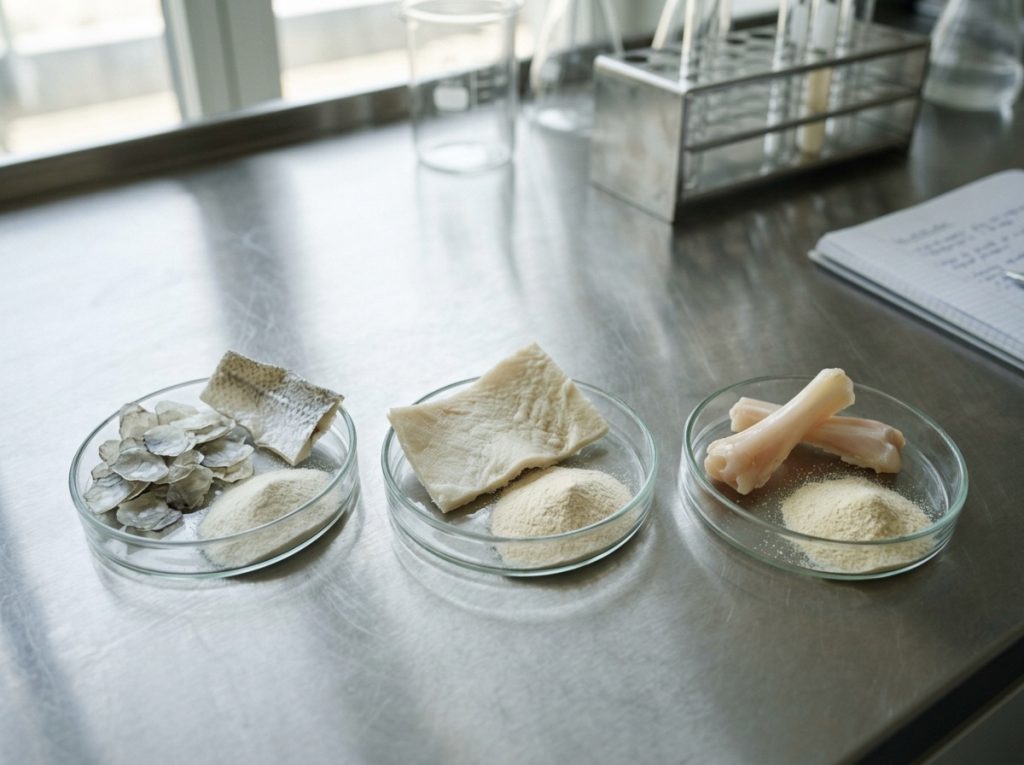
Collagen peptides are available from three primary animal sources. The source is not interchangeable – it determines the collagen type present in the finished product and therefore how the product can be positioned.
Marine collagen – sourced from fish skin, scales or bones. Predominantly Type I collagen. The most common source for beauty, skin, hair and nail supplement positioning. Water-soluble and neutral in taste, which suits liquid and powder formats well.
Bovine collagen – sourced from cattle hide or bones. Contains Type I and Type III collagen. A versatile source used across beauty, bone, joint and sports nutrition positioning. No fish allergen. The most widely used collagen source in European supplement manufacturing by volume.
Chicken collagen – sourced from chicken sternum cartilage. Predominantly Type II collagen. Used specifically in joint health and mobility supplement positioning. Less common in beauty formulas.
The three sources aren’t interchangeable on cost and claim alone: marine carries a fish allergen declaration that rules it out for some channels outright, bovine is the more cost-efficient choice at volume but lacks marine’s beauty-category recognition, and chicken is the narrowest fit – strong for joint positioning, weak for almost anything else.
We work through that trade-off with you at the brief stage, alongside combination actives, serving size and your target market’s regulatory requirements, built on having taken collagen formulas through this process across 40+ export markets. If your positioning spans more than one category – beauty and joint support, for example – a blend of sources may be the right approach.
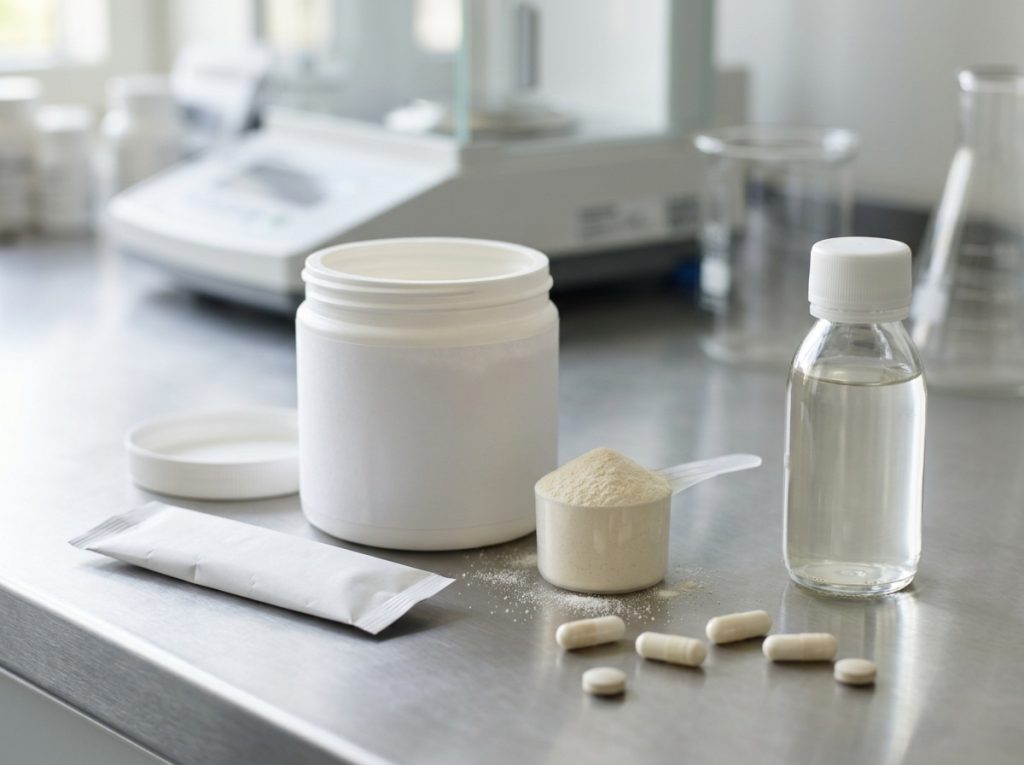
The format question is easier than it looks – start with the dose
Collagen peptides are a high-dose ingredient. A typical serving in a standalone collagen product runs 5–10g. That quantity determines which formats are practical for a full-dose product.
Powder (jar or stick pack) – the most practical format for full-dose collagen across all three sources. Collagen peptides dissolve readily and are largely tasteless in solution, which makes them straightforward to work with in both flavoured and unflavoured powder formulas. Suitable for beauty, sports nutrition and bone and joint positioning depending on source.
Liquid shots (25 ml and 60 ml) – accommodate a full 5–10g serving in a single-serve ready-to-drink format. Most commonly used with marine collagen for beauty positioning, but bovine collagen in shot format is also produced for sports and active lifestyle brands.
Capsules – practical at lower doses, typically 1–2g per serving. Suited to combination formulas where collagen is one of several actives – joint support formulas combining chicken collagen with glucosamine, chondroitin and vitamin C, for example.
Tablets – possible at low doses in combination formulas. Less common for collagen as a primary active given the dose required.
The ingredients most commonly combined with collagen peptides
The right combination depends on source, positioning and target market. Below are the actives most commonly specified alongside collagen peptides in European supplement formulas.
With marine or bovine collagen – beauty and skin positioning:
Hyaluronic acid · Vitamin C · Biotin · Zinc · Glutathione · Selenium · Botanical extracts
With bovine or chicken collagen – bone and joint positioning:
Glucosamine · Chondroitin · Hyaluronic acid · Vitamin D3 · Vitamin K2 · Calcium · Magnesium · Vitamin C
With bovine collagen – sports nutrition and active lifestyle:
Amino acids · Vitamin C · Magnesium · Electrolytes · B vitamins
The combination of actives in your formula depends on your positioning, target market and label strategy. Our R&D team reviews ingredient compatibility and dose during the formulation brief.
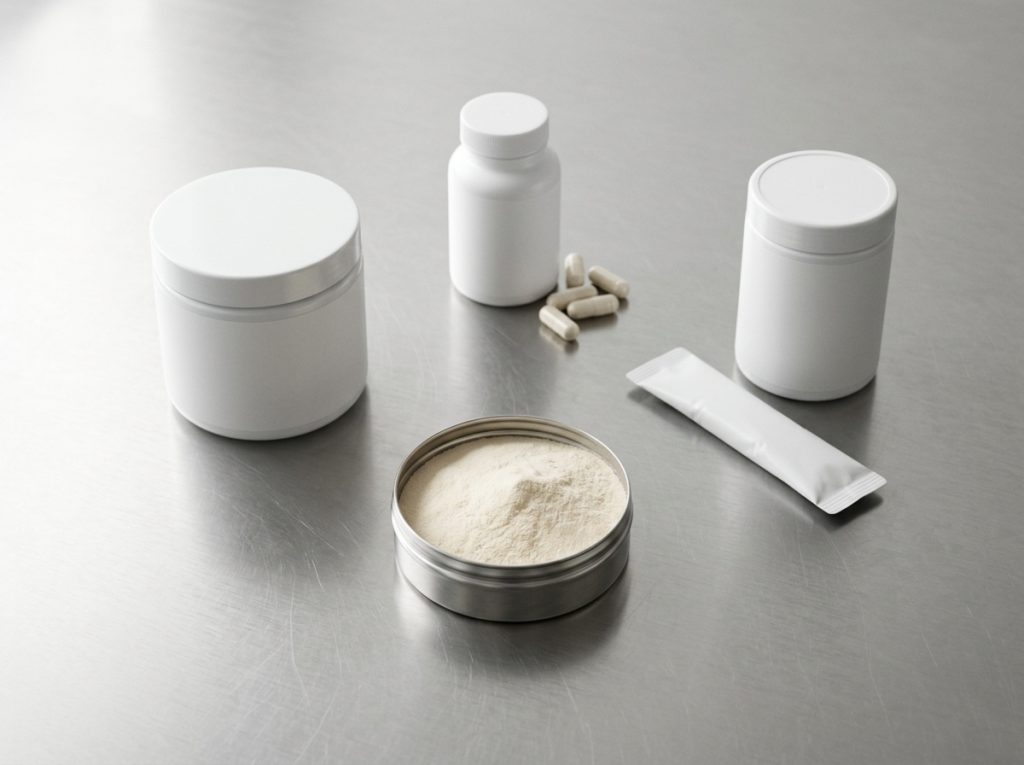
From beauty shots to joint capsules – what we build with collagen
Beauty collagen powders – marine or bovine collagen peptides in flavoured or unflavoured powder, combined with hyaluronic acid, vitamin C, biotin or other actives. Jar or stick pack format.
Beauty collagen shots – marine collagen in 25 ml and 60 ml liquid shot format, combined with hyaluronic acid, vitamin C and botanical extracts. Private label formulas available.
Joint support formulas – chicken or bovine collagen combined with glucosamine, chondroitin, vitamin D3 and K2 in capsule or tablet format.
Sports nutrition collagen – bovine collagen peptides combined with amino acids and vitamin C in powder or capsule format for active lifestyle and recovery positioning.
Multi-ingredient beauty capsules – lower-dose marine or bovine collagen combined with biotin, zinc and antioxidants for hair, skin and nail formulas.
Bone health formulas – bovine collagen combined with calcium, vitamin D3, K2 and magnesium in tablet or capsule format.
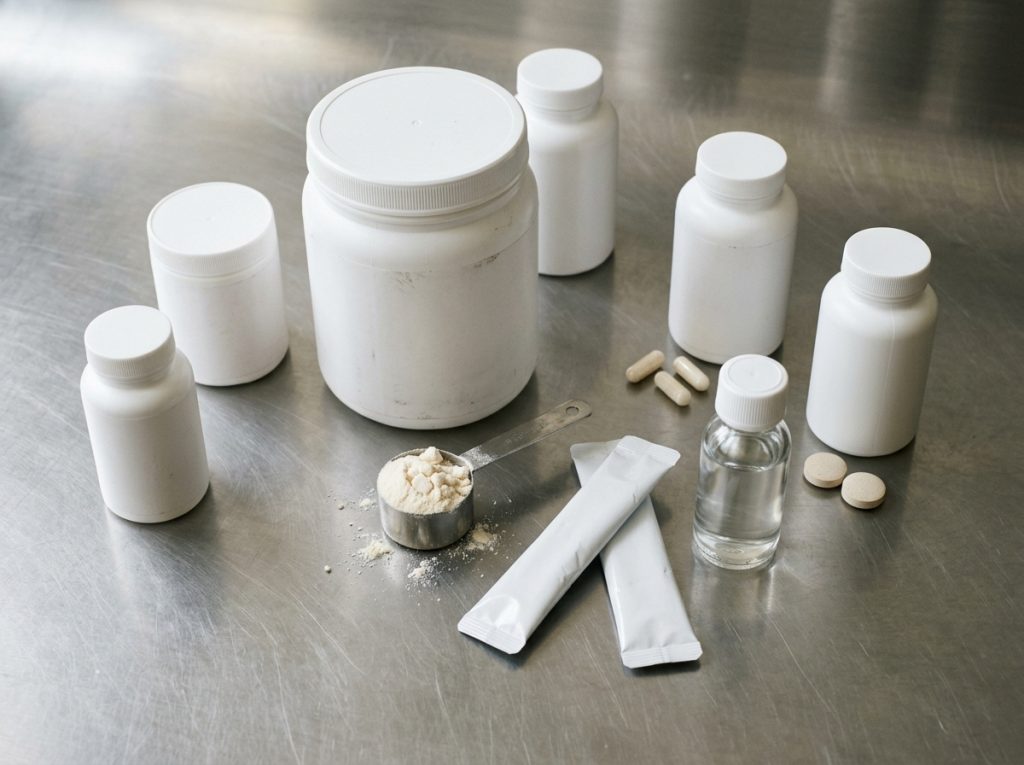
Have a formula already?
Contract manufacturing runs your specification – source, dose, format and combination actives – on our equipment, through our QC, out the door under your label.
[See contract manufacturing]
Want to move faster?
Our private label library includes tested collagen formulas across beauty powders, beauty shots and joint-support capsules across marine, bovine and chicken sources, adjustable on dose, combination actives or flavour.
[See private label]
Building something new?
Our in-house R&D team develops custom collagen formulas from brief through pilot batch, including source-blend compatibility and flavour testing specific to this ingredient.
[See formulation R&D]
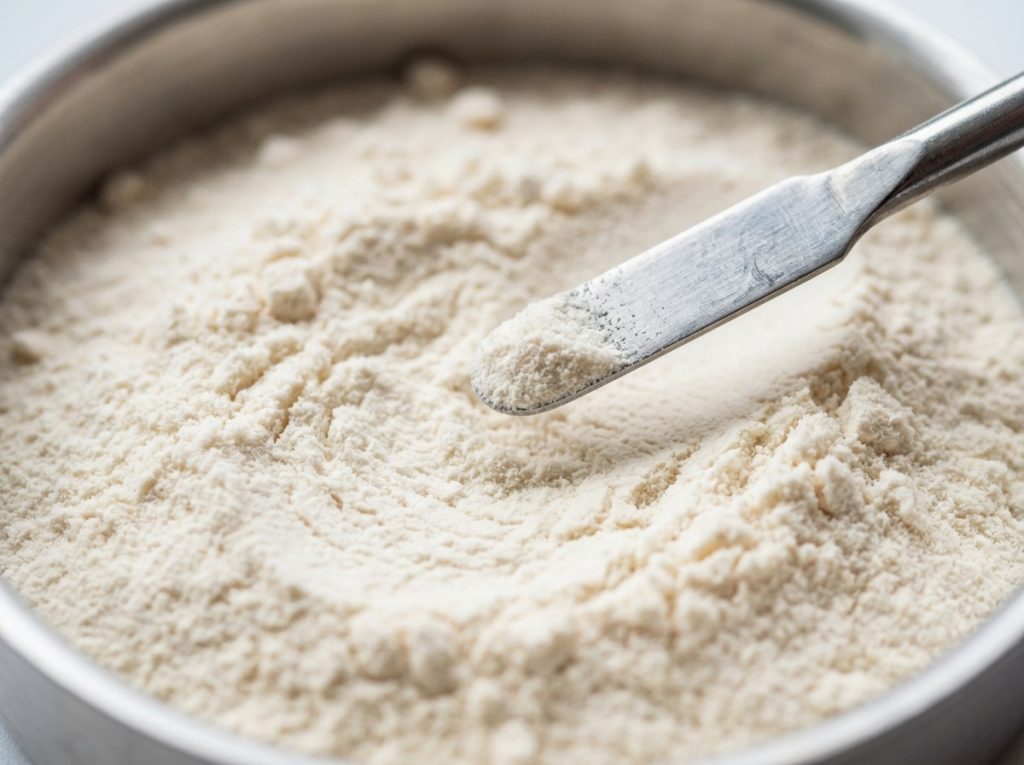
Tell us what you're building. We'll get back to you quickly.
Share your format, indicative volume and target markets and we will come back to you within a few business days to confirm receipt and let you know what we need to prepare a full response. Pricing, capability details and a fit assessment follow as soon as we have reviewed your brief.
What brands ask us about Collagen Peptides manufacturing?
What is the difference between collagen peptides and hydrolysed collagen?
They are the same thing. Hydrolysed collagen and collagen peptides both refer to collagen protein that has been broken down through hydrolysis into shorter peptide chains. The terms are used interchangeably across the industry.
What is the difference between marine, bovine and chicken collagen?
The source and the collagen type present. Marine collagen from fish is predominantly Type I, used in beauty and skin positioning. Bovine collagen from cattle contains Type I and III, used across beauty, bone and sports positioning. Chicken collagen is predominantly Type II, used in joint health positioning. The source determines which positioning the finished product suits.
Can you combine more than one collagen source in a single formula?
Yes. Multi-source collagen formulas – marine and bovine, or bovine and chicken – are produced where the brief calls for positioning across more than one category. Compatibility and blend ratios are confirmed during the formulation brief.
What serving size is standard for a collagen supplement?
Most standalone collagen products specify 5–10g of hydrolysed peptides per serving. This dose range is what most European retail products use and determines which formats are practical. Combination formulas where collagen is one of several actives typically use lower doses – 1–2g – in capsule or tablet format.
What formats can collagen peptides be manufactured in?
Powder (jar or stick pack), liquid shots (25 ml and 60 ml), capsules and tablets. The format depends on the target dose, source and positioning. Our R&D team confirms the right format for your brief.
Do you offer private label collagen peptide formulas?
Yes. Our library includes tested collagen formulas across powders, shots and capsules, across marine, bovine and chicken sources. Most can be adjusted on dose, combination actives or flavour before the production run.
What testing does each collagen batch go through?
Identity, potency (confirmed peptide content), heavy metals and microbial count. Marine collagen carries a mandatory fish allergen declaration. Every batch ships with a Certificate of Analysis. Retention samples held for a minimum of 12 months. Not every test applies to every product; what’s required is agreed with you upfront and confirmed in the specification.
What is the minimum order quantity for collagen peptide supplements?
MOQ is confirmed per project during the quote and varies by format, source and formula complexity. Pilot batches are available for new formulations.
How long does a production run take?
Approximately 11–13 weeks from purchase order for an existing or private label formula. Custom formulation adds time – confirmed per project.