
Psyllium Husk Supplement Manufacturer – Fiber, Regularity and Cholesterol Support
Noviatic is a European contract manufacturer of finished food supplements, based in Vilnius and Kaunas, Lithuania. We formulate and manufacture psyllium husk supplements – powder, capsules and fiber blends – for supplement brands, pharmacy chains and distributors across 40+ countries, inside our own GMP-certified facility.
A fibre source with a well-documented mechanism
Psyllium husk comes from the seed husks of Plantago ovata, a plant cultivated primarily in India. It is almost entirely fiber – and unusually, the majority of that fiber is soluble, which is what makes it functionally distinct from most other fiber sources.
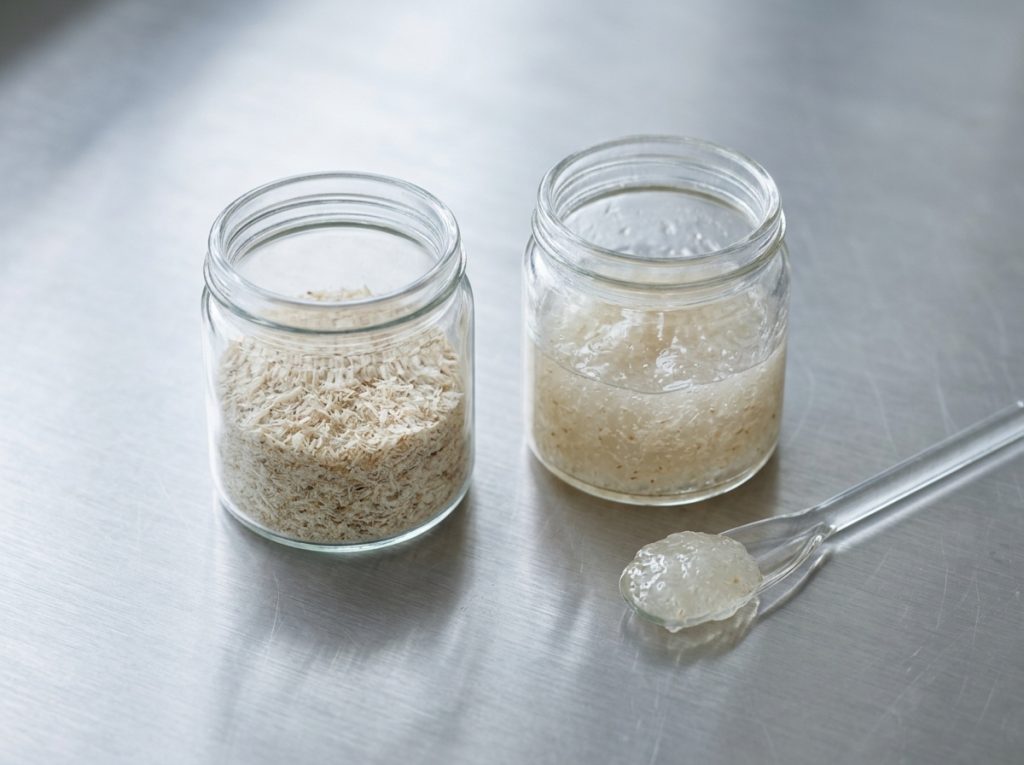
When psyllium contacts water, the soluble fiber fraction forms a viscous gel in the gut. That gel does two things relevant to supplement positioning: it increases the bulk and water content of stool, supporting regularity, and it binds bile acids in the digestive tract, which contributes to normal blood cholesterol levels.
This mechanism is well established in the scientific literature and is one of the reasons psyllium has become a staple in digestive health and cardiovascular wellness supplements across European pharmacy retail. The European psyllium products market was valued at USD 75.74 million in 2025 and is projected to reach USD 117.74 million by 2033 – growth driven in part by a documented fibre gap across European adults, whose average dietary fibre intake remains below the recommended 25g daily threshold.
For brands looking to support specific health claims on their label, the regulatory position for psyllium is worth reviewing with your regulatory advisor before briefing a formula – the conditions of use are specific and tied to daily dose.
Powder, capsules or blends – the format follows the dose
Psyllium is a high-dose ingredient by nature, and the dose you choose determines which EU health claim the product can carry: 5g per serving supports a faecal bulk claim, while 10g per day is required for the cholesterol claim – a threshold that rules out most solid dosage forms as the primary delivery vehicle. We work through that dose-to-claim-to-format trade-off with you at the brief stage, built on having taken psyllium formulas through this process across 40+ export markets already.
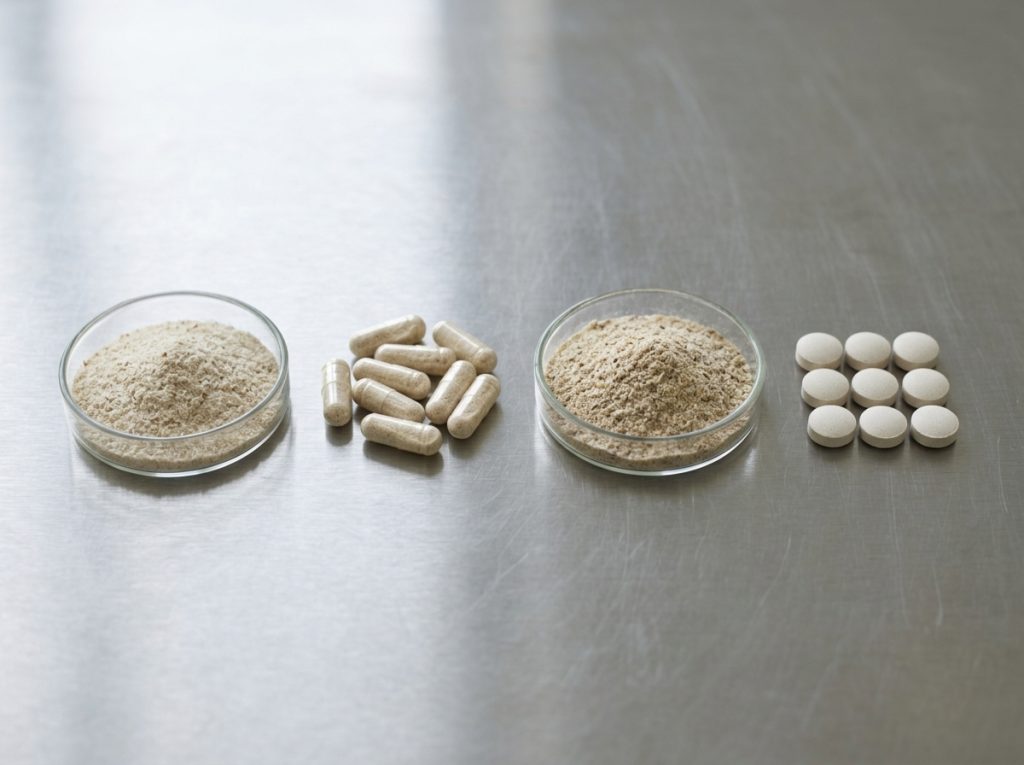
Powder is the natural format. A single serving of 5–10g mixes into water or juice and is consumed as a drink. It’s the format most pharmacy buyers expect for a psyllium product and the one that delivers the claimed dose in a single serving. Flavoured and unflavoured options are both viable – psyllium powder has a mild, neutral taste that accepts flavour well.
Capsules suit lower-dose supplementation or brands that want the convenience positioning of a swallowable format. At 10g per day, a capsule format requires a high daily capsule count – typically six to ten capsules depending on fill weight – which should be communicated clearly on the label and confirmed with your target consumer in mind.
Combination powders – psyllium blended with other fiber sources (inulin, acacia, chicory root), prebiotics or digestive support actives. Suits brands building a broader gut-health proposition rather than a single-ingredient fiber product.
Tablets are technically possible at lower doses but uncommon for psyllium – the bulk and water-absorbing properties of the ingredient create formulation challenges in compression.
Why the water instruction matters more than it looks?
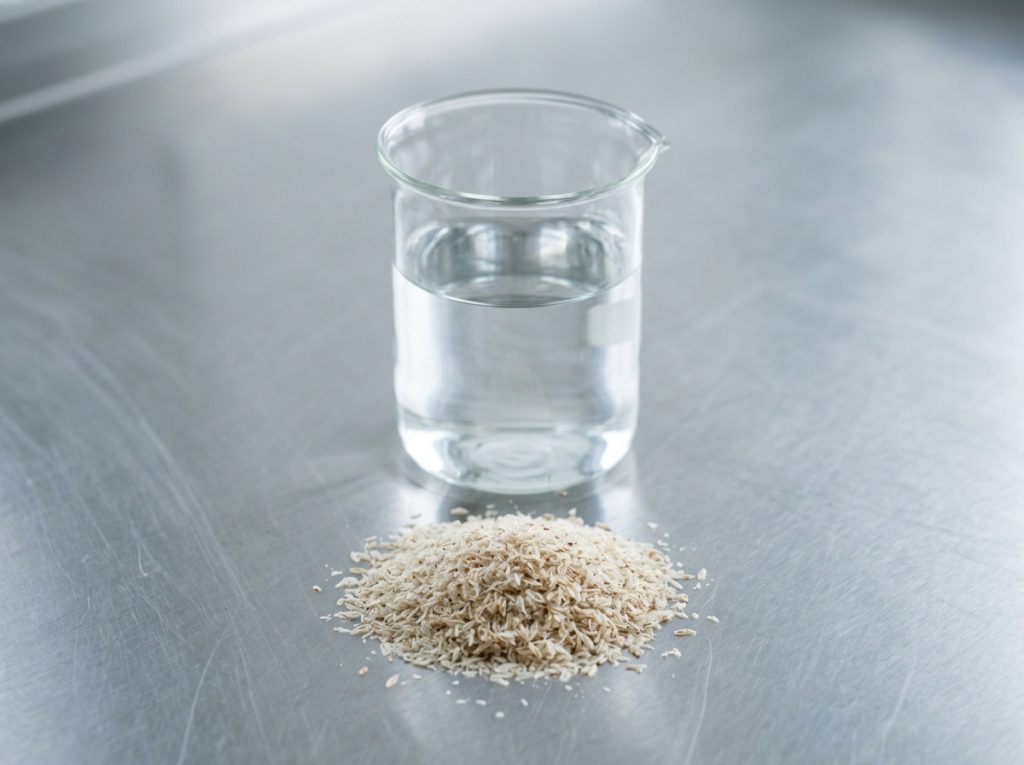
Psyllium’s gel-forming action requires adequate fluid intake at the point of consumption. A product taken with insufficient water can have the opposite of the intended effect. For brands manufacturing psyllium supplements, the consumer instruction – take with at least 200–300 ml of water – is a functional requirement of the active, not a standard disclaimer.
This is worth knowing at the formulation stage because it influences how the product is positioned, how it’s labelled and which consumer the format actually serves. A capsule format without clear hydration guidance is a product that may underperform or cause consumer complaints regardless of manufacturing quality.
The briefs we receive most often for this ingredient
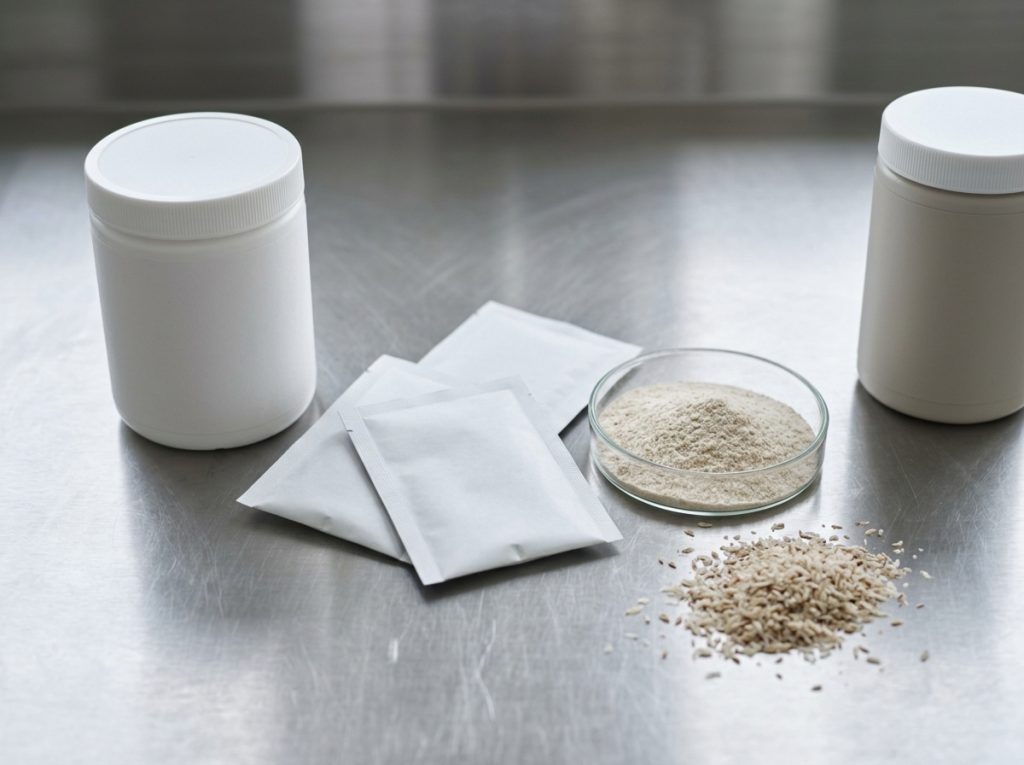
Pharmacy private label digestive health – single-ingredient psyllium husk powder in a jar or sachet, unflavoured or lightly flavoured, for regularity positioning. One of the most consistent private label requests from European pharmacy chains.
Cholesterol support products – psyllium at the 6g/day dose, often combined with beta-glucans, plant sterols or omega-3 for a broader cardiovascular wellness positioning. Primarily pharmacy and specialist health retail.
Gut health and prebiotic blends – psyllium as a fibre base in a multi-ingredient gut-health powder, combined with inulin, acacia fibre, digestive enzymes or probiotic strains. DTC brands and health food retail positioning.
High-dose fibre supplements – brands building a clinical or therapeutic-adjacent fibre product, often for the German or Nordic markets where regulatory literacy among consumers is higher and health claims carry more weight.
Have a formula already?
We run your specification – dose, format, blend – through our QC, under your label.
[See contract manufacturing]
Want to move faster?
Our private label library includes tested psyllium formulas – single-ingredient fiber powders and combination gut-health blends – you can adjust on dose, blend or flavour.
[See private label]
Building something new?
Our R&D team develops custom psyllium formulas from brief through pilot batch, including the blend compatibility and claim work your dose requires.
[See formulation R&D]
Tell us what you're building. We'll get back to you quickly.
Share your format, indicative volume and target markets and we will come back to you within a few business days to confirm receipt and let you know what we need to prepare a full response. Pricing, capability details and a fit assessment follow as soon as we have reviewed your brief.
What brands ask us about psyllium manufacturing?
What EU health claims does psyllium husk carry?
Two authorised claims under EU Regulation (EC) No 1924/2006. The first – that psyllium husk contributes to an increase in faecal bulk – is eligible at 5g per serving. The second – that psyllium seed husk contributes to maintenance of normal blood cholesterol levels – requires 10g per day. Both claims require the product to be labelled with an instruction to take with adequate water. These are some of the most clearly defined health claim conditions in EU supplement regulation.
What is the difference between psyllium husk and psyllium husk powder?
Psyllium husk is the separated outer coating of the Plantago ovata seed. Psyllium husk powder is the same material milled to a finer particle size, making it easier to blend and fill into capsules. The EU health claims reference psyllium husk and psyllium seed husk specifically – confirm grade suitability during the brief.
Can psyllium be put into capsules?
Yes, at lower supplementary doses. At the 10g/day dose required for the cholesterol health claim, a capsule format requires six to ten capsules per day depending on fill weight – feasible but requiring clear label communication and consumer expectation management. For brands where convenience is the priority and dose is secondary, capsules are appropriate. For brands where the health claim is the primary value, powder is the more practical format.
Can psyllium be combined with other ingredients?
Yes. Common combinations include inulin, acacia fibre and chicory root for a broader prebiotic fibre blend; beta-glucans and plant sterols for cardiovascular positioning; and digestive enzymes or probiotic strains for gut-health concepts. Compatibility and blend uniformity are confirmed during formulation.
Does psyllium affect how the product needs to be labelled?
Yes. EU health claim conditions for psyllium require the label to include an instruction to take with adequate water – typically 200–300 ml minimum per serving. This is a regulatory requirement tied to the claim, not optional copy. Labels not carrying this instruction are not eligible to use the authorised health claims.
What is the minimum order quantity for psyllium supplements?
MOQ is confirmed per project during the quote and varies by format and blend complexity. Pilot batches are available for new formulations – conditions confirmed at the quoting stage.
How long does a psyllium production run take?
Approximately 11–13 weeks from purchase order for an existing or private label formula. Custom formulation, including blend development and flavour adaptation, adds time – confirmed per project.
What testing does each psyllium batch go through?
Identity, fibre content, heavy metals and microbial count. Every batch ships with a Certificate of Analysis. Retention samples are held for a minimum of 12 months. Not every test applies to every product; what’s required is agreed with you upfront and confirmed in the specification.